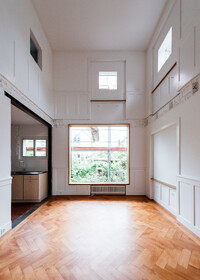
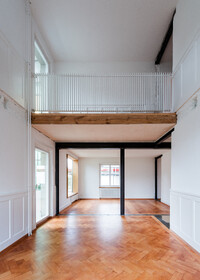
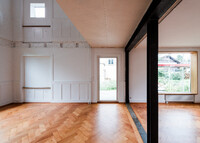
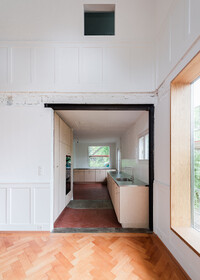
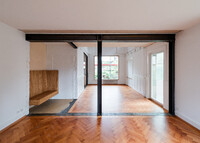
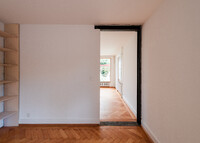
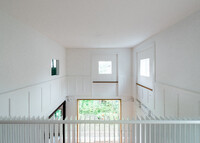
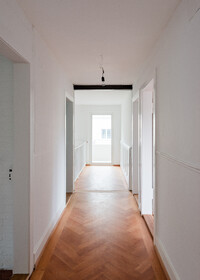
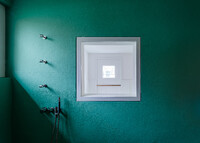
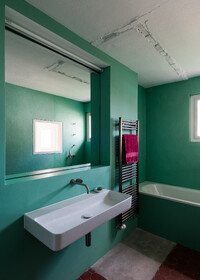
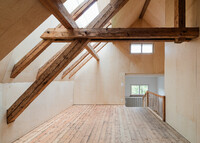
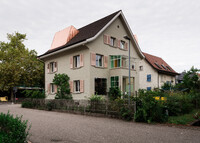
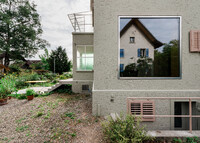
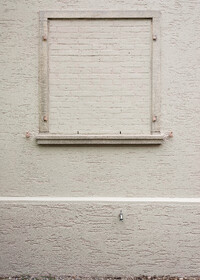
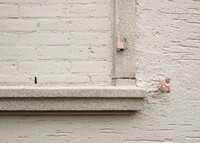
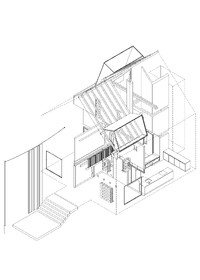
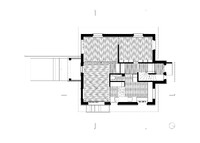
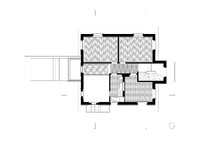
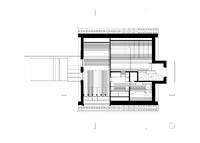
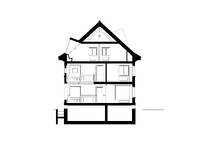
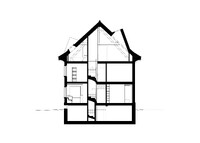
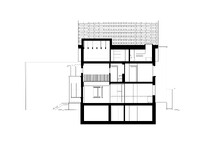
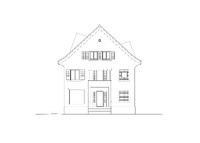
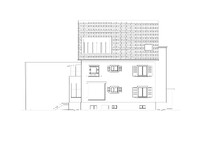
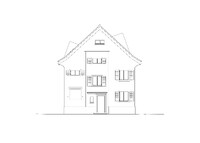
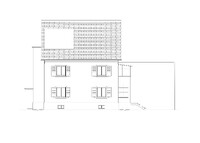
The radical approach to the existing structure, on the one hand in the directness of the demolition and on the other in the uncompromising preservation, honours the house in its original power and at the same time breathes new life into it. By deliberately refraining from standardising measures, the original elements of the house remain atmospherically distinctive without becoming decorative. Some of them can continue to fulfil their original function, while others remain visible as traces; however, all of them are on an equal footing with the deliberately detailed interior. The consistent spatial opening across all three floors transforms the house into a new entity with a wide variety of spatial relationships. The two-storey dining area is recognisable from everywhere as the hub of family life. On the ground floor and in the attic, new structural openings sharpen the atmospheric and functional significance of the finely balanced, doorless transitions. This fine tuning extends to the outdoor space through the targeted enlargements, reductions and closures of individual window openings.
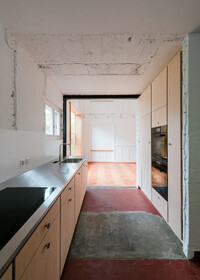
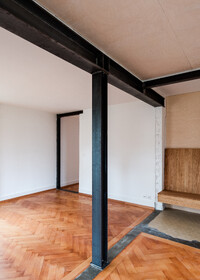
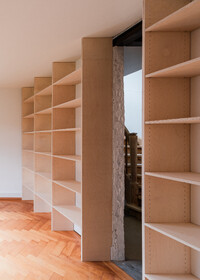
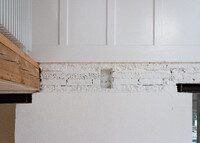
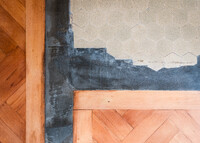
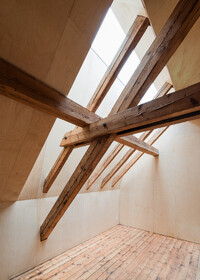
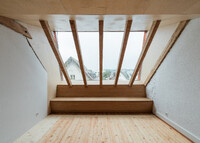
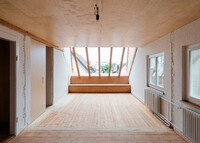
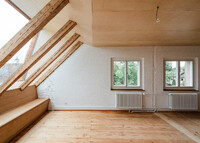
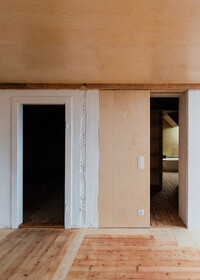
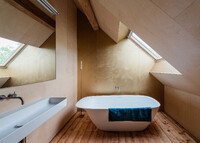
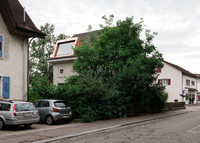
The superimposition of the original chambering with the new room sequences is particularly evident on the ground floor due to the change in materials and the visible scars of demolition within the room-defining surfaces, and not least due to the new support structure made of raw rolled steel beams. The existing floor coverings from the time of construction have been left in place throughout, with only broken and damaged areas being filled with cement. The wall and ceiling surfaces have been painted white, creating a calm but detailed surface. The precise lines of the new wooden fixtures contrast with the crude, unadorned cuts in the existing building structure. The only spatial extension of the house is in the attic, where two dormer windows have been added: in the entrance hall, the zenithal opening creates an introverted atmosphere, while the bedroom, as the end point of the sequence of rooms, turns back to the earthly realm with its large frontal opening. In the garden, the consistent search for homely qualities with proportionate, simple means is manifested in a clear and simple gesture: the demolition of the balcony parapet and the addition of a few steps and a garden seating area.
Direct commission
Special mention award "Best Transformation 2018"
Published among others in Archithese "Swiss Performance 2018"
Architecture: Stefan Wülser + Nicolaj Bechtel + Margarida Leão
Civil engineer: Schnetzer Puskas
Building physics: Raumanzug