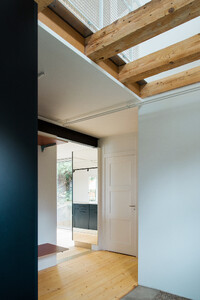
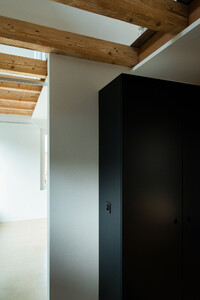
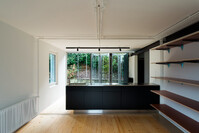
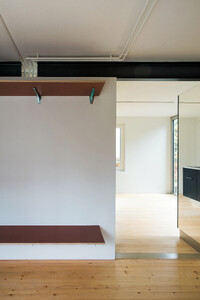
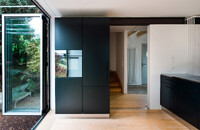
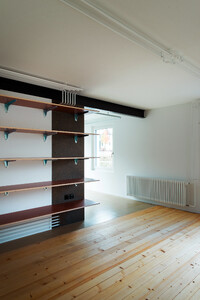
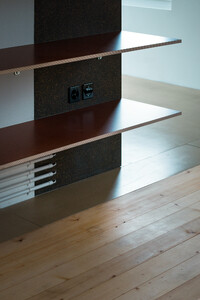
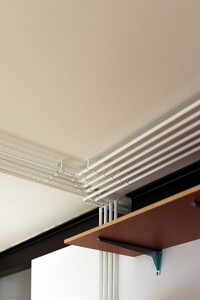
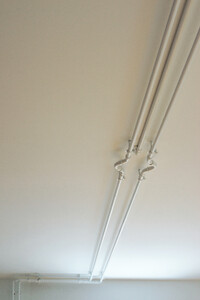
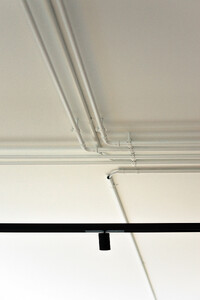
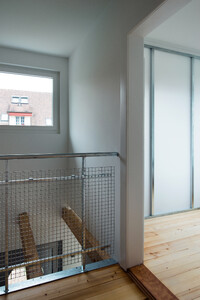
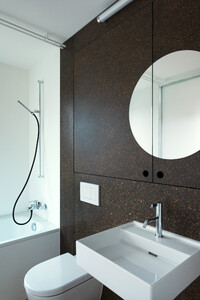
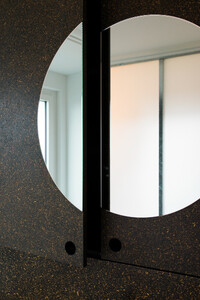
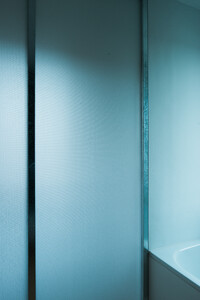
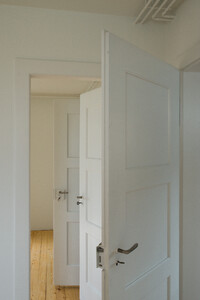
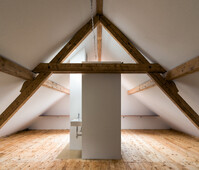
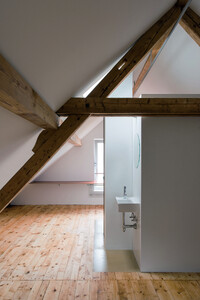
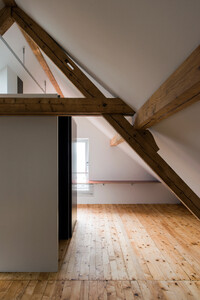
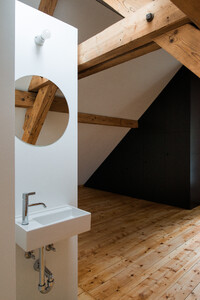
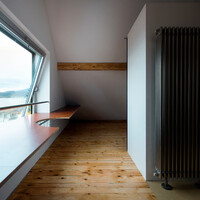
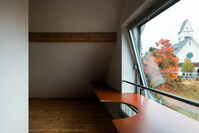
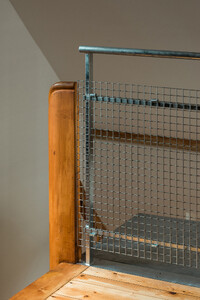
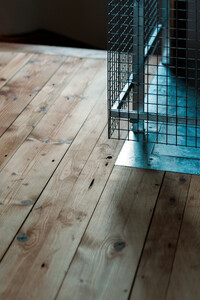
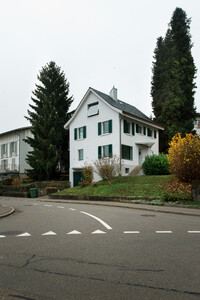
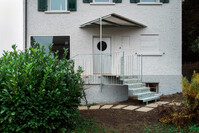
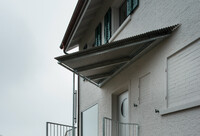
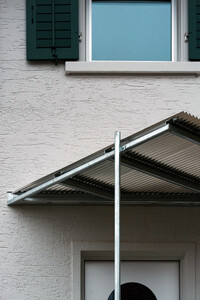
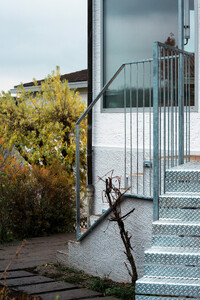
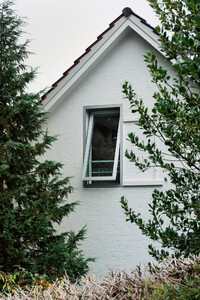
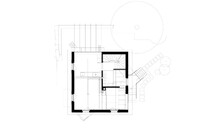
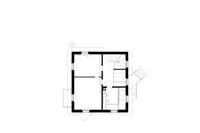
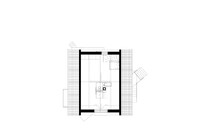
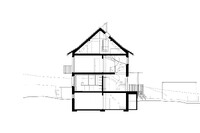
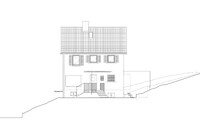
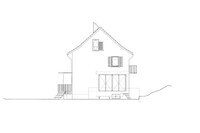
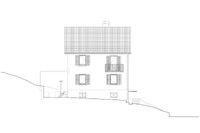
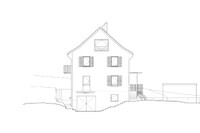
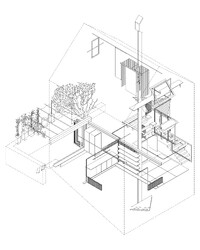
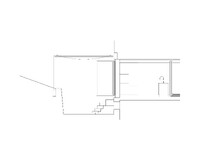
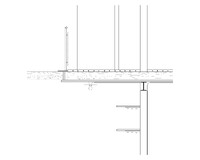
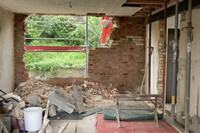
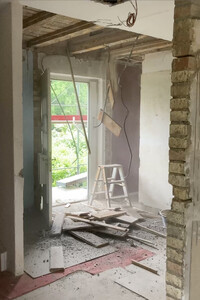
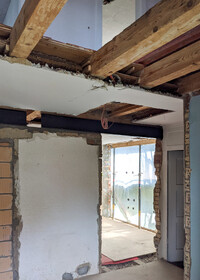
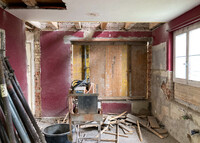
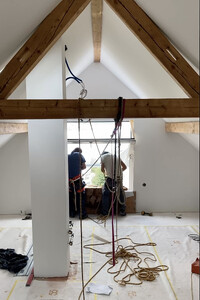
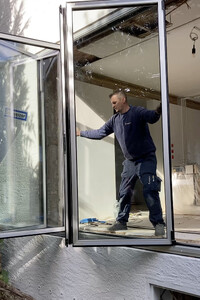
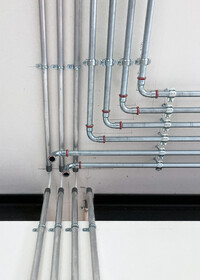
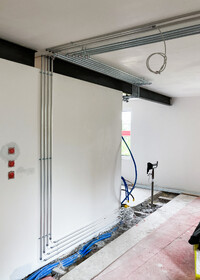
Between a green residential neighborhood and Jacques Kehrer's imposing, historicist church lies a four-story workers' house from the 1930s. In a comprehensive renovation, the building—which currently has generic rooms and little connection to its outdoor space and view—will be transformed into a functional, exciting home for a young family. In a radically pragmatic design approach, the exterior walls are freed from all technical and functional tasks. A new backbone in the center of the building connects the floors with all the basic technical installations and divides the rooms into zones with fixtures and furniture of all kinds.
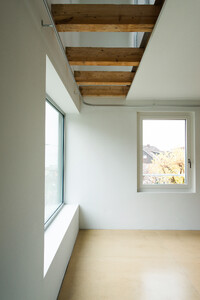
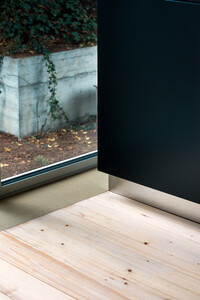
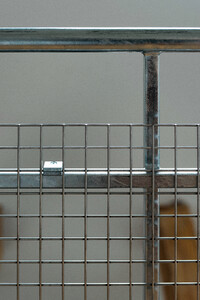
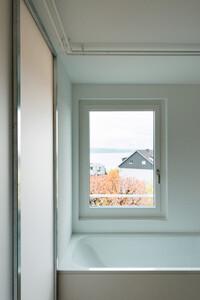
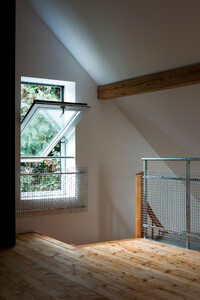
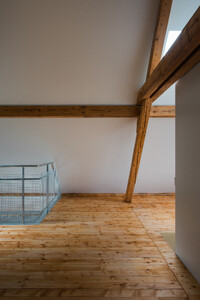
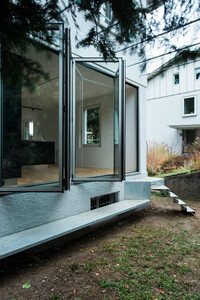
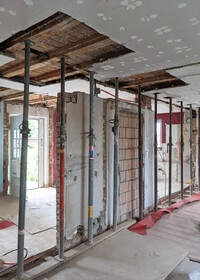
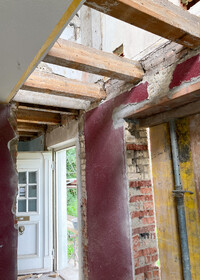
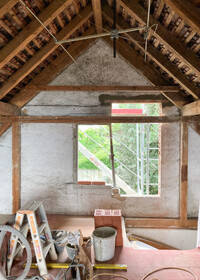
The deliberate contrast between the bare, white exterior walls and the complex, technically and haptically more sophisticated center of the building creates excitement and a feeling of spaciousness. This allows the former rooms to be connected laterally along the exterior walls, giving a sense of the building's size. The exterior wall becomes a membrane-like separation between the house and the garden, allowing for larger and more controlled views of the lush greenery. The concentration of functions in the center also allows for great freedom in terms of layout. Above the entrance area—where the old wet rooms with dilapidated surfaces and installations are located today—the floors are being stripped back to the joists. The exposed skeleton of the house allows for spatial connection across the floors and also creates a vertical connection, given the relative smallness of the space.
Direct commission
Building of the week, Swiss Architects
Published among others in Hochparterre "2022-03", Werk Bauen + Wohnen "Depth, 2022-03"
Architecture: Stefan Wülser + Mona Fögler + Ileana Crim
Civil engineer: Schnetzer Puskas
Building physics: Raumanzug