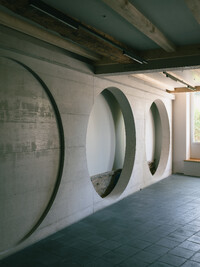
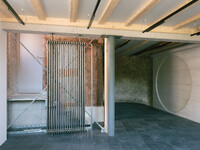
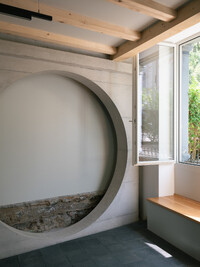
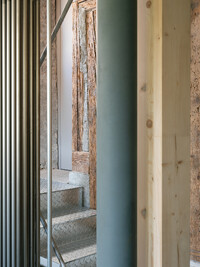
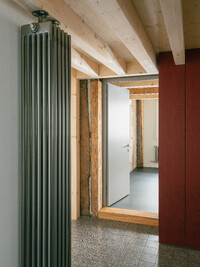
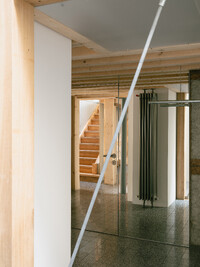
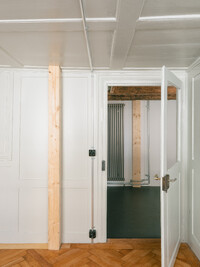
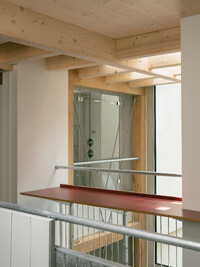
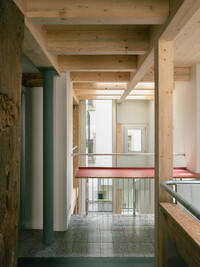
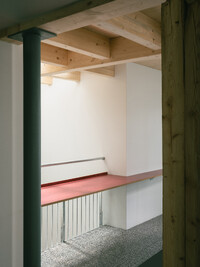
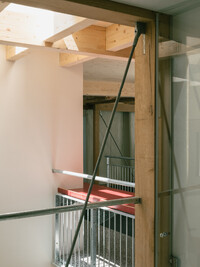
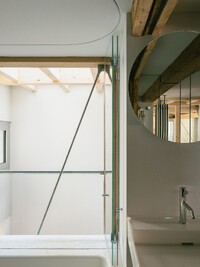
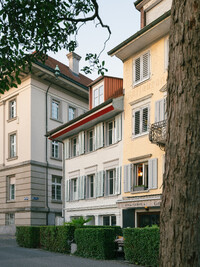
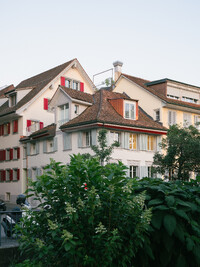
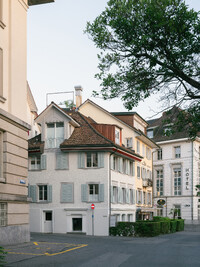
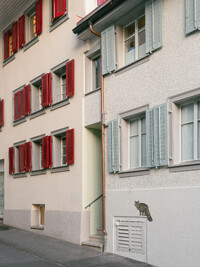
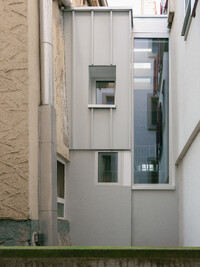
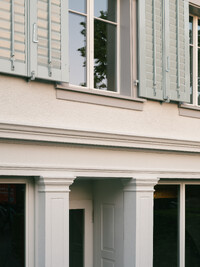
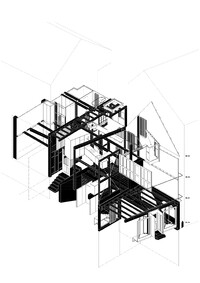
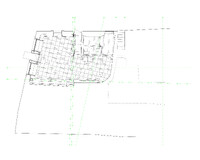
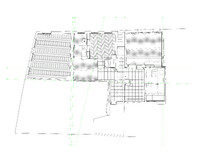
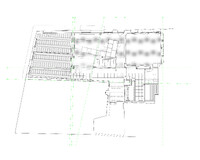
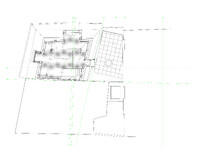
The transformation of Seestrasse 1 in Zug assigns unconditional value to every existing structure and focuses on the design of integrative processes rather than hastily formulated goals and images. In doing so, a non-linear approach to complex existing structures was tested outside the usual phases of Swiss planning norms, which we are currently applying to various construction challenges and situations. Instead of step-by-step planning, in which the most important strategic decisions have to be made prematurely and without comprehensive knowledge of the existing structures and the project-inherent interrelationships, the approach is based on a parametric way of thinking, in which decisions are made interdependently and remain dynamic.
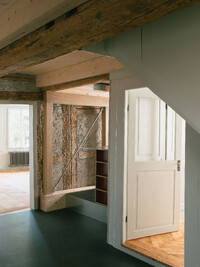
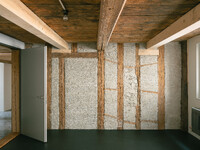
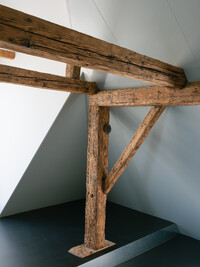
During the first phase of the controlled demolition of precarious and non-load-bearing components, it became clear that the interlocking spatial structure consisted not of one, but of two houses, four rooms in a third house, and a former alleyway that had been built over several times. Since the Middle Ages, more than 30 verifiable renovations have taken place. Among the most significant changes are the rotation of the roof (with reuse of the old beams), the closing off of rooms in the neighboring house, and the lowering and opening of the ground floor to the new lake promenade in the 19th century. We addressed this initial situation with three projects.
1. Dissection
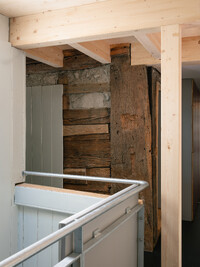
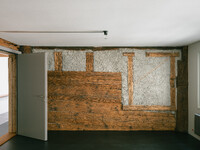
As part of the first building application for gradual demolition, submitted three months after work began, layers were removed and spatial and load-bearing structures were exposed. With the aim of “finding the house between times,” damaged components were removed, temporary protective measures were taken, and cladding was dismantled, analyzed, and stored for reuse. It was remarking how many components had already been altered or reused. Rather than individual, defining eras in the house's history, it was their diversity, breaks, and moments of friction that were to become the spatial driver of the transformation.
2. Repair
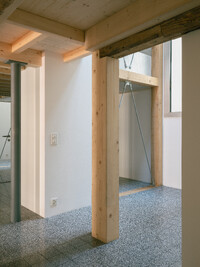
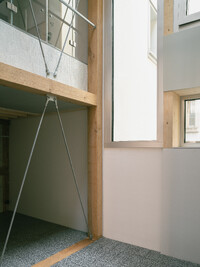
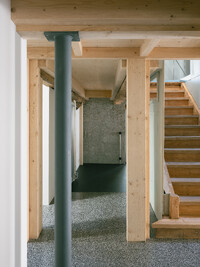
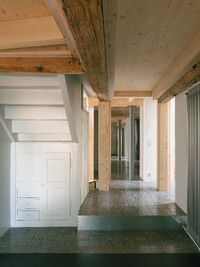
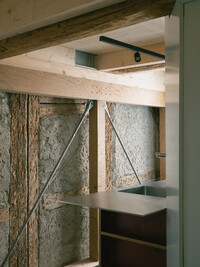
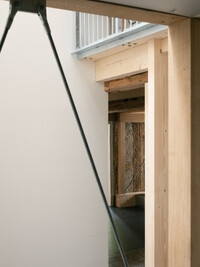
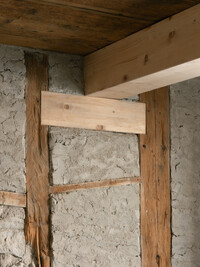
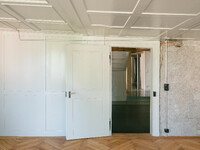
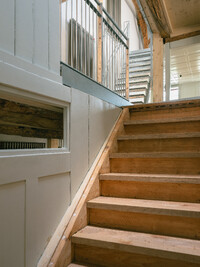
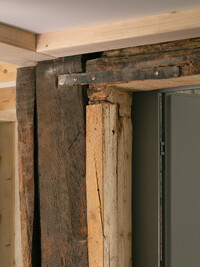
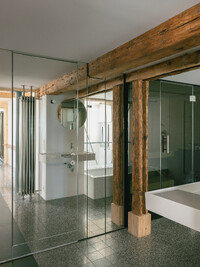
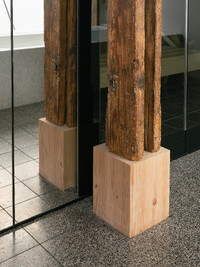
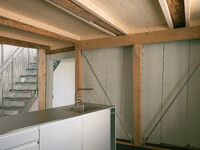
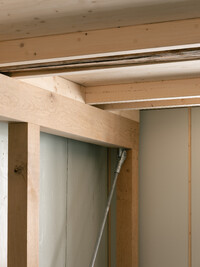
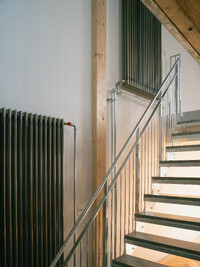
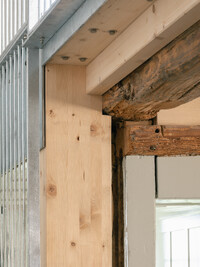
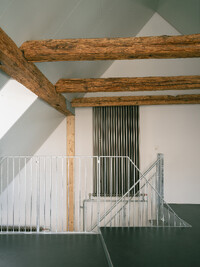
The rooms facing the lake featured high-quality baroque interior, but were in acute danger of collapsing; the rear rooms showed signs of wood rot due to poor ventilation and the unfavorable placement of the former wet areas. Various important components (such as the fire wall to the neighboring house or the support for the twisted roof) were completely missing. In order to preserve the intact components not merely as relics, but to restore and secure their function and load-bearing capacity, site-specific supplementary constructions were implemented. What they all have in common is that they relieve the existing structure of the task of bracing and are designed for a service life of 150(+) years.
3. Appropriation
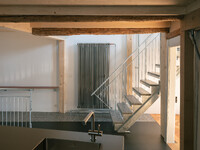
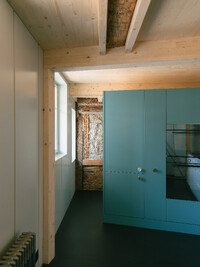
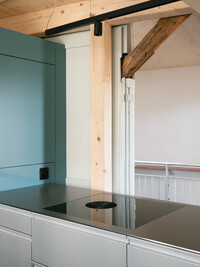
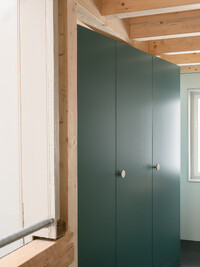
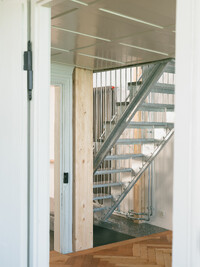
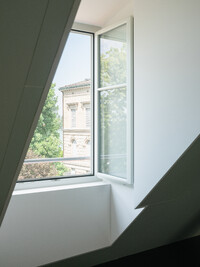
In order to enable the reprogramming of the house as a place to live and work with a public space on the ground floor, the repaired structures and old surfaces were only supplemented with light, furniture-like elements. While the extensive repairs point to a long service life and future changes (beyond our renovation), a time horizon of 15 years and the principle of non-destructive/ design-for-disassembly joining are essential prerequisites for the architectural formulation of the interventions.
Private competition 1st prize
Hase in silver "Hochparterre - Die Besten 2024", nominated to the ARC Award 2025
Published among others in Archithese "Swiss Performance 2025", Hochparterre "12/24" , Zuschnitt "#99"
Architecture: Stefan Wülser + Agnieszka Łatak + Geraldine Burger + Riccardo Simioni + Clemens Krüger
Execution in close cooperation with the heritage conservation and medieval building research department of the city of Zug
Timber construction engineer: IHT
Structural engineer: Basler Hofmann
Building physics: RSP
Building services: Olos